
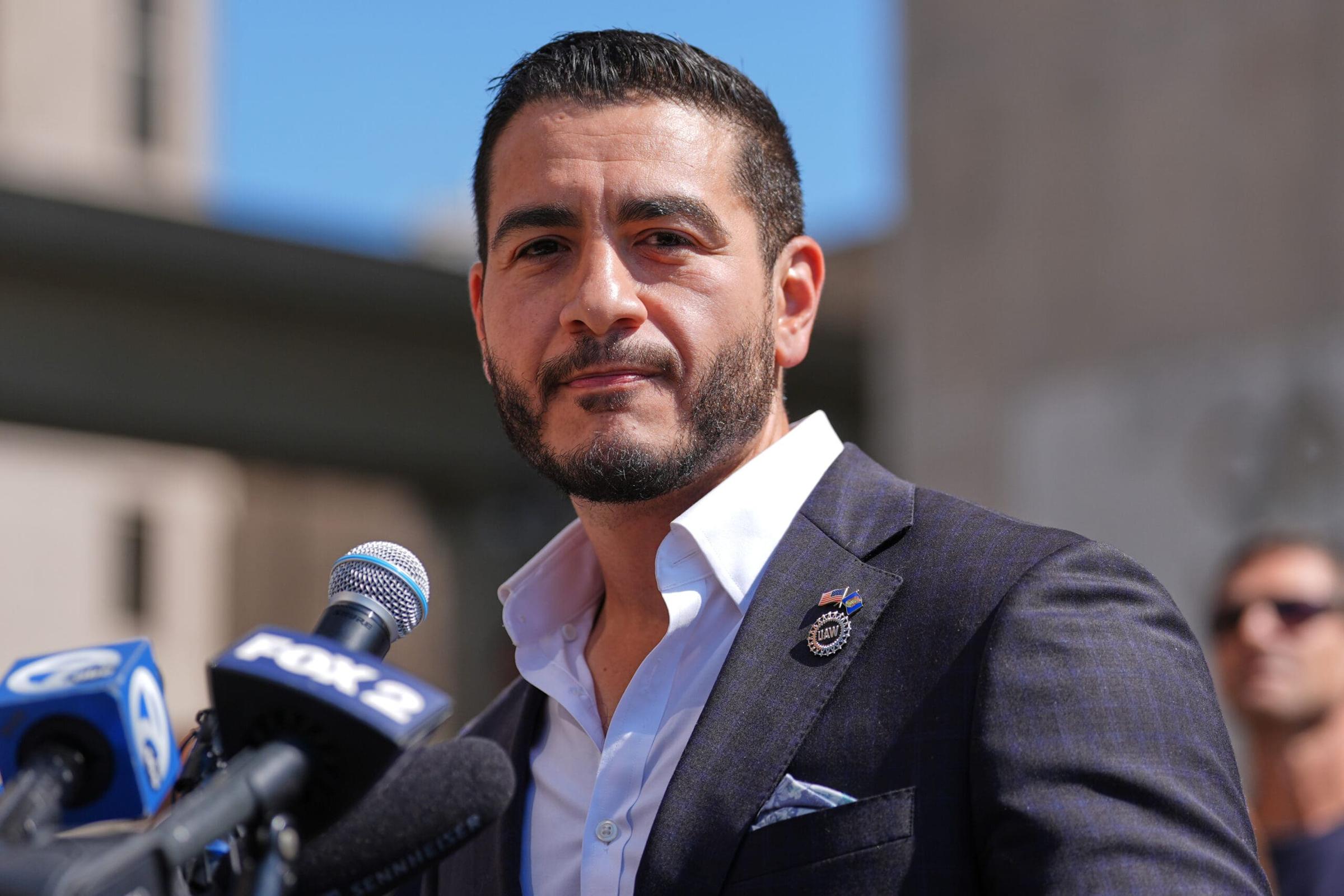
The discourse around Abdul El-Sayed's position on Medicare for All is mostly confused. Reading most of the reporting on the matter would lead one to believe that El-Sayed initially supported Medicare for All but now merely supports a "public option." This is not really true under conventional meanings of the phrase "public option." El-Sayed seems to be inviting this understanding for rhetorical effect, but all he has really done is drop his opposition to a type of duplicative insurance that nobody would ever want to buy.
Conventional Public Options
In the health insurance context, the phrase "public option" has typically referred to two types of arrangements:
-
The government creates a health insurance plan and attempts to sell it in the employer and individual markets. People become insured under the government plan when their employer switches them onto it or when they select it in an individual health exchange. When people become insured in this way, they cease to pay premiums to private insurance companies and instead pay them to the government. This is how the L.A. Care Health Plan works.
-
The government provides free health insurance to people. It then allows private insurers to compete with the free health insurance plan. If people select a private plan, they cease to be covered by the government plan and become covered by the private plan. The government pays their premium. This is how Medicare Advantage works.
The key to these conventional public options is that individuals have to choose between the public plan and a private plan. They are not covered by both.
Medicare for All
Medicare for All proposals do not work like this. Instead, every individual is enrolled in the public plan for free. Unlike under the second type of public option above, individuals are not permitted to opt out of this plan and select a private plan that the government pays for.
Typically, Medicare for All proposals have allowed individuals to buy supplemental private insurance for things not covered by the public plan, but not to buy duplicative private insurance that covers the same things the public plan covers.
All El-Sayed did in his Medicare for All "flip-flop" was say that, unlike typical Medicare for All proposals, he favors a version that would not ban duplicative private insurance. This modification allows him to say things like "I will not ban private insurance" and "people can still keep their private insurance plans." But, in reality, virtually nobody is going to buy duplicative insurance when they already receive the same tax-funded coverage for free.
According to KFF, the average premium for an employer-sponsored family plan now stands at $27,000 per year. In the world El-Sayed is proposing, these families would receive this same sort of coverage from the government, and employers would no longer be required to provide private health insurance to their workers. In this scenario, employers are not going to put $27,000 of their labor budget toward a private insurance plan that duplicates coverage their employees already have. Nor would their employees want them to: they'd much prefer to have the cash, especially given that they are now paying taxes into the public health insurance system.
Even a super-rich individual who is obsessed with insuring against health risks is not going to spend $27,000 a year to insure things that the government already insures. It would make far more sense for them to simply accumulate that money in a bank account so they can self-pay for concierge care.
Depending on how generous the Medicare for All plan is, some people might opt for supplemental private insurance that covers things Medicare for All does not. But this has always been allowed in Medicare for All proposals. And these would not be anything like the private insurance that currently exists. Even insurance plans that partially duplicate the Medicare for All package, if they are offered at all, would not look anything like the private insurance plans that currently exist.
So from my vantage point, El-Sayed is basically playing games here, for better or worse. Formally permitting duplicative insurance while making it uneconomical for anyone to buy or sell it unlocks certain rhetoric but does not really change anything about the reality of the proposal.